
Winter use and frost protection
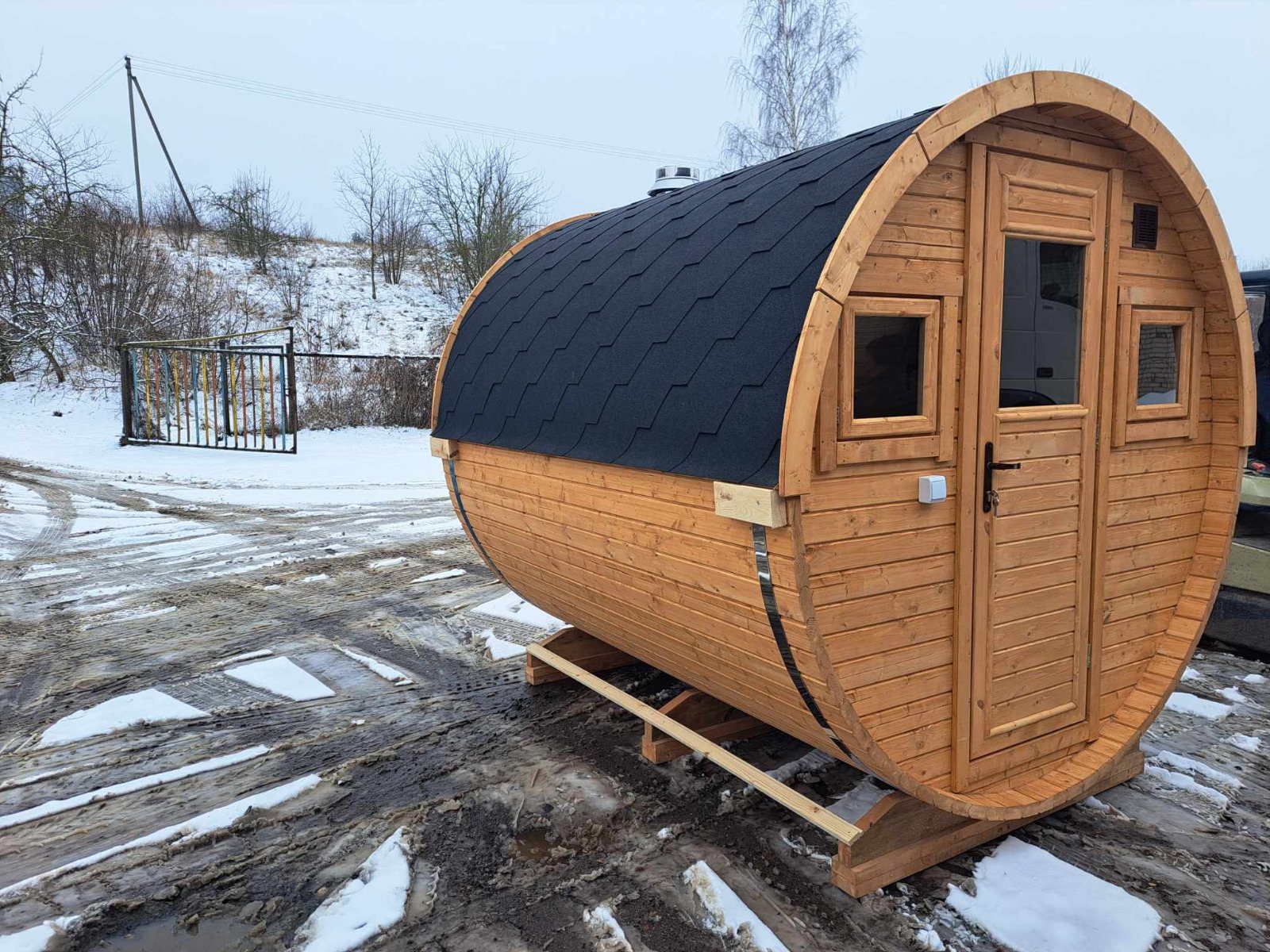
Winter is the best season of the year to use a hot tub. Cold outside, warm in the water, and snow around the rim. But winter also makes a demand that summer does not: water that stands still in freezing weather freezes. Here is what you need to know to use the hot tub and the sauna through the winter in Hallingdal — without anything coming to harm.
Yes, you can use the hot tub in winter
The short answer is yes. Our hot tubs are used all year round, including when it is well below zero.
The rule is simple, and it has only two options: use the hot tub every second or third day, or empty it completely. It is the middle ground that is the problem — water left standing unused in the cold with nothing to warm it.
If you use it regularly
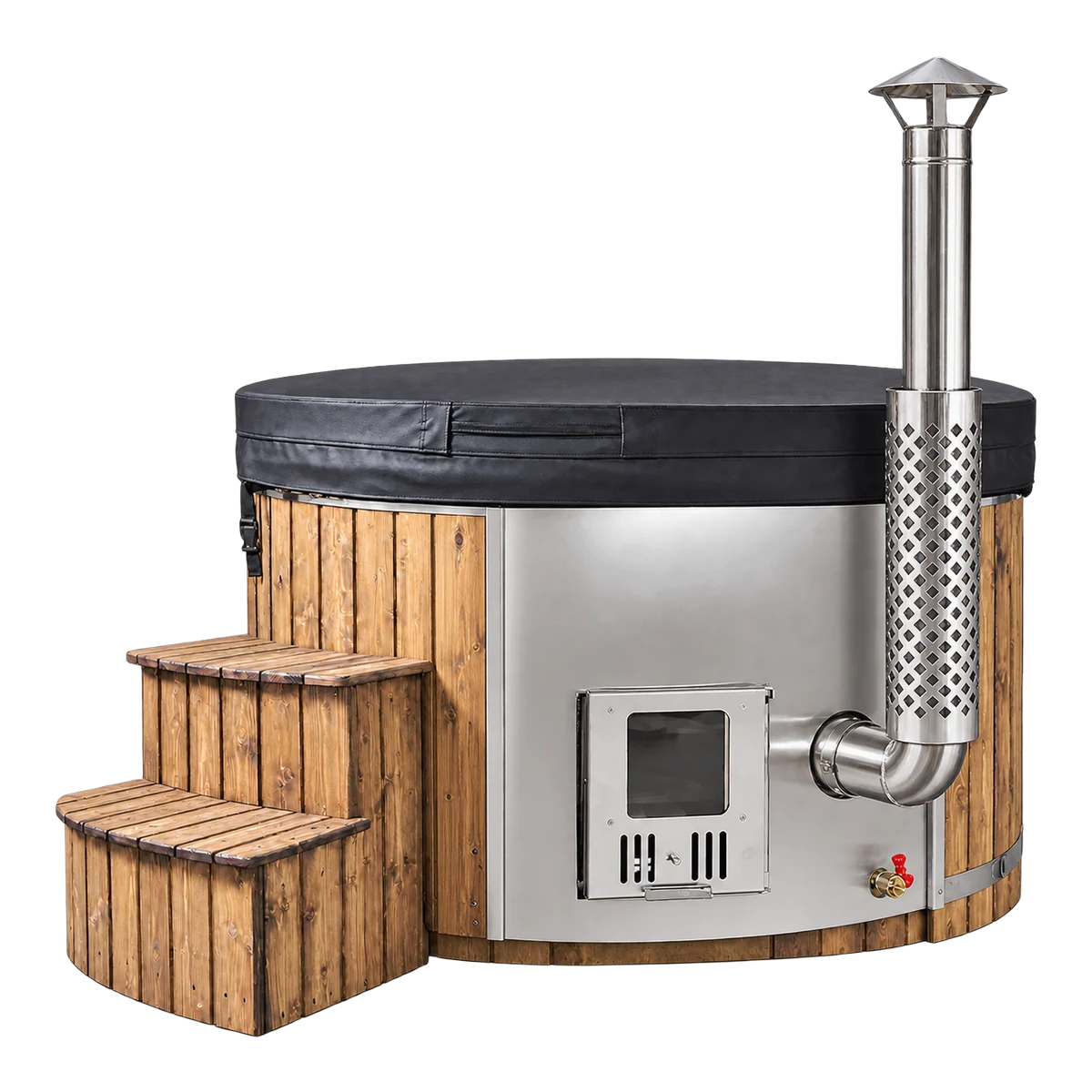
If you light the stove every second or third day, you keep the water moving and up to temperature, and you can leave it in between baths. Always put the lid on when you have finished. That keeps the heat in, and the snow, leaves and debris out.
If you empty it
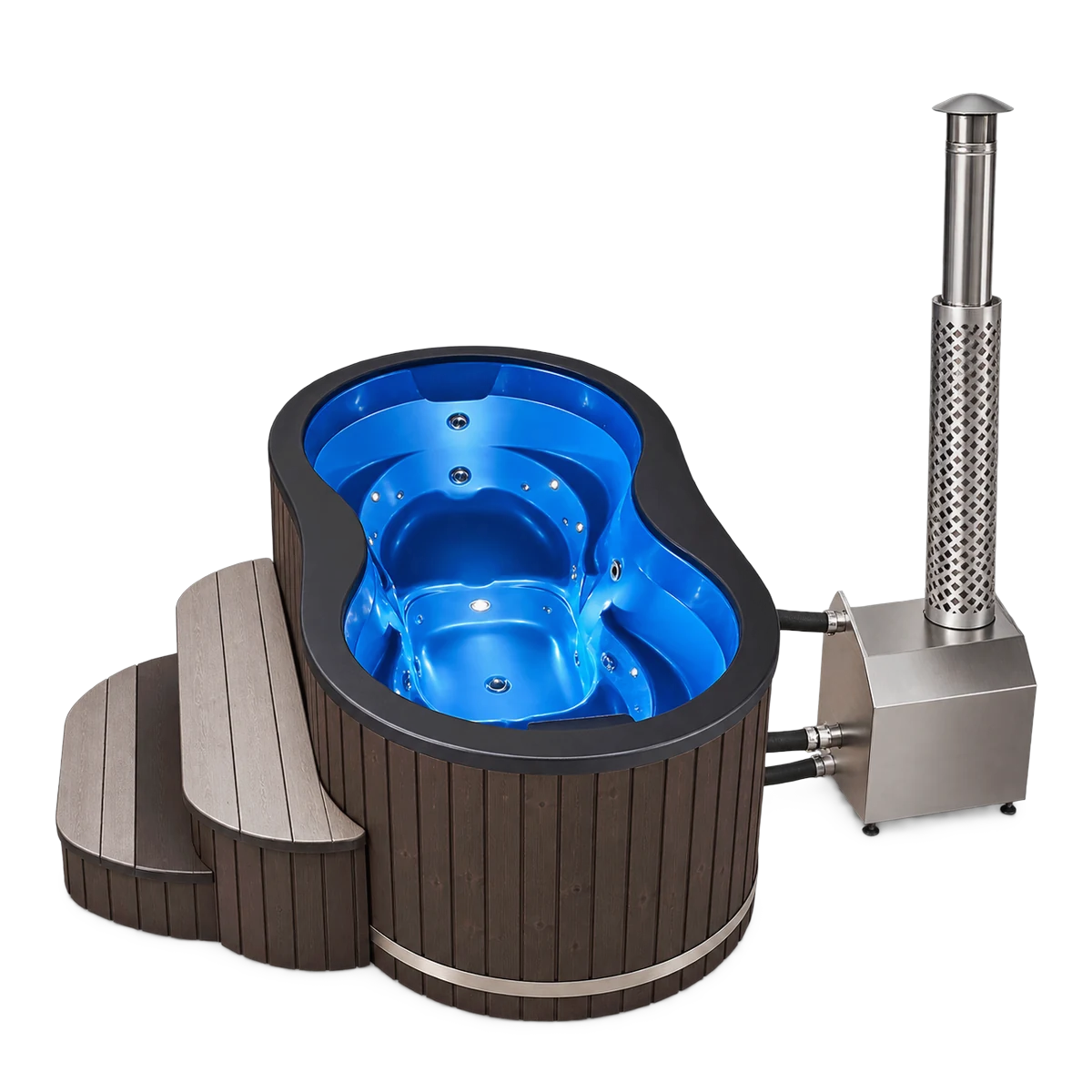
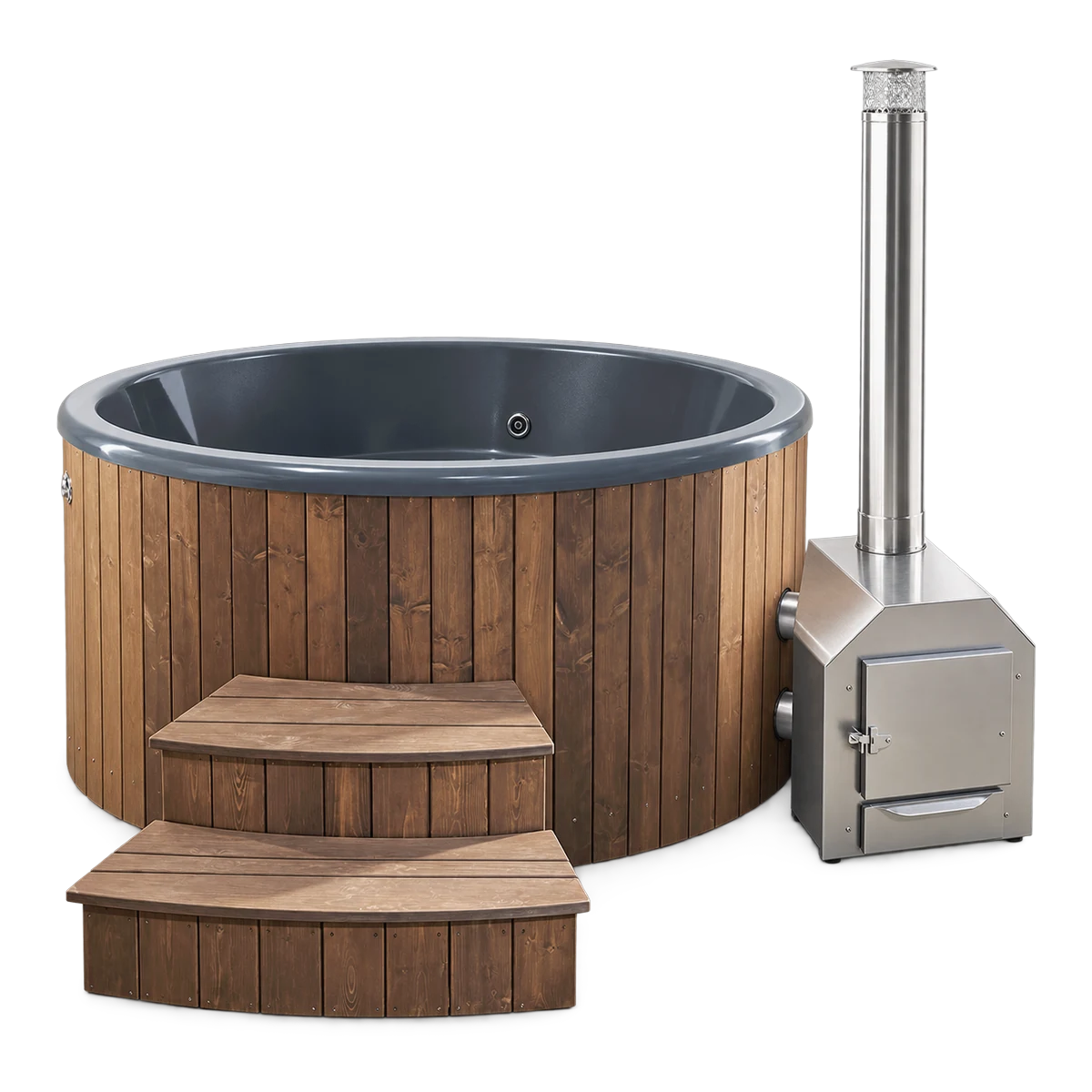
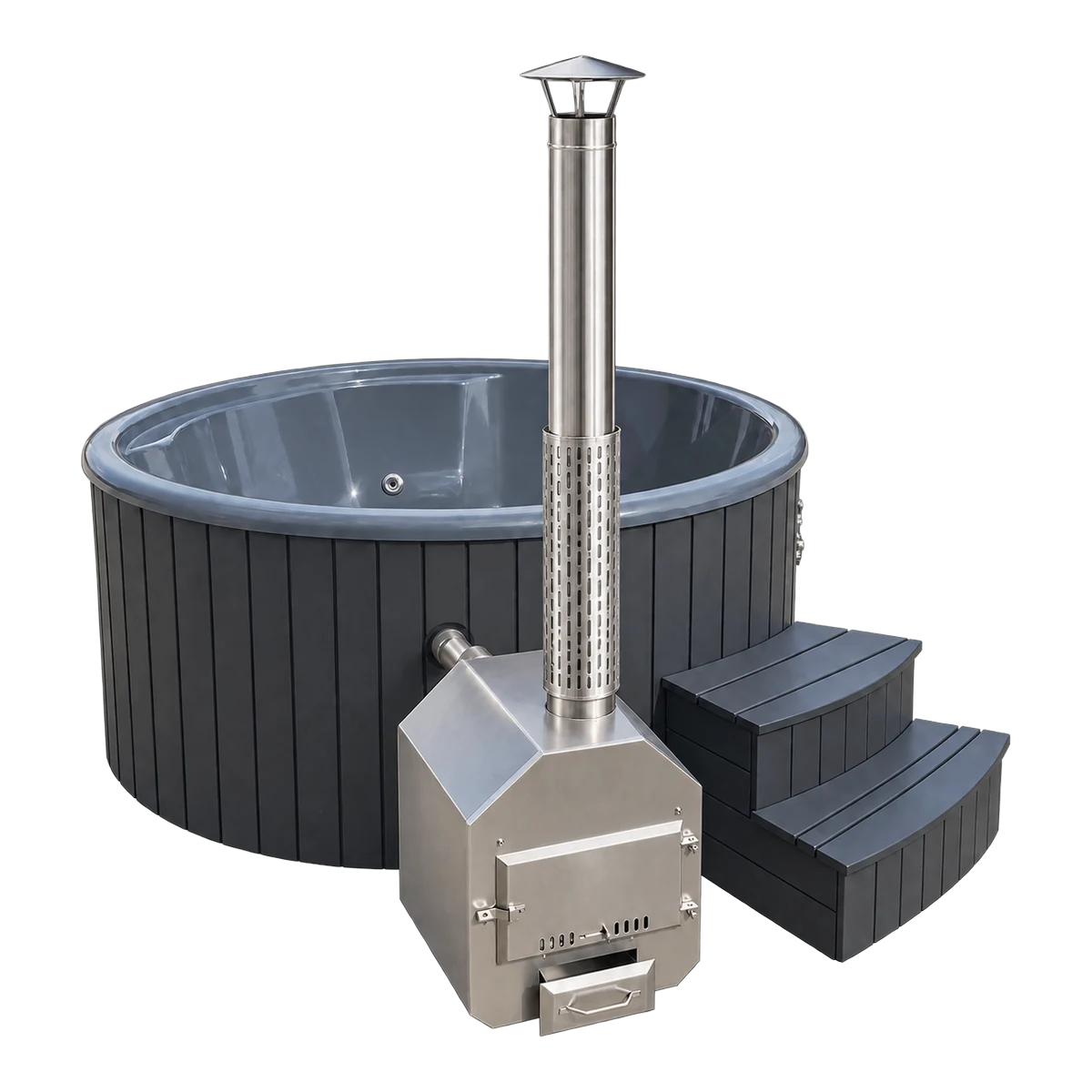
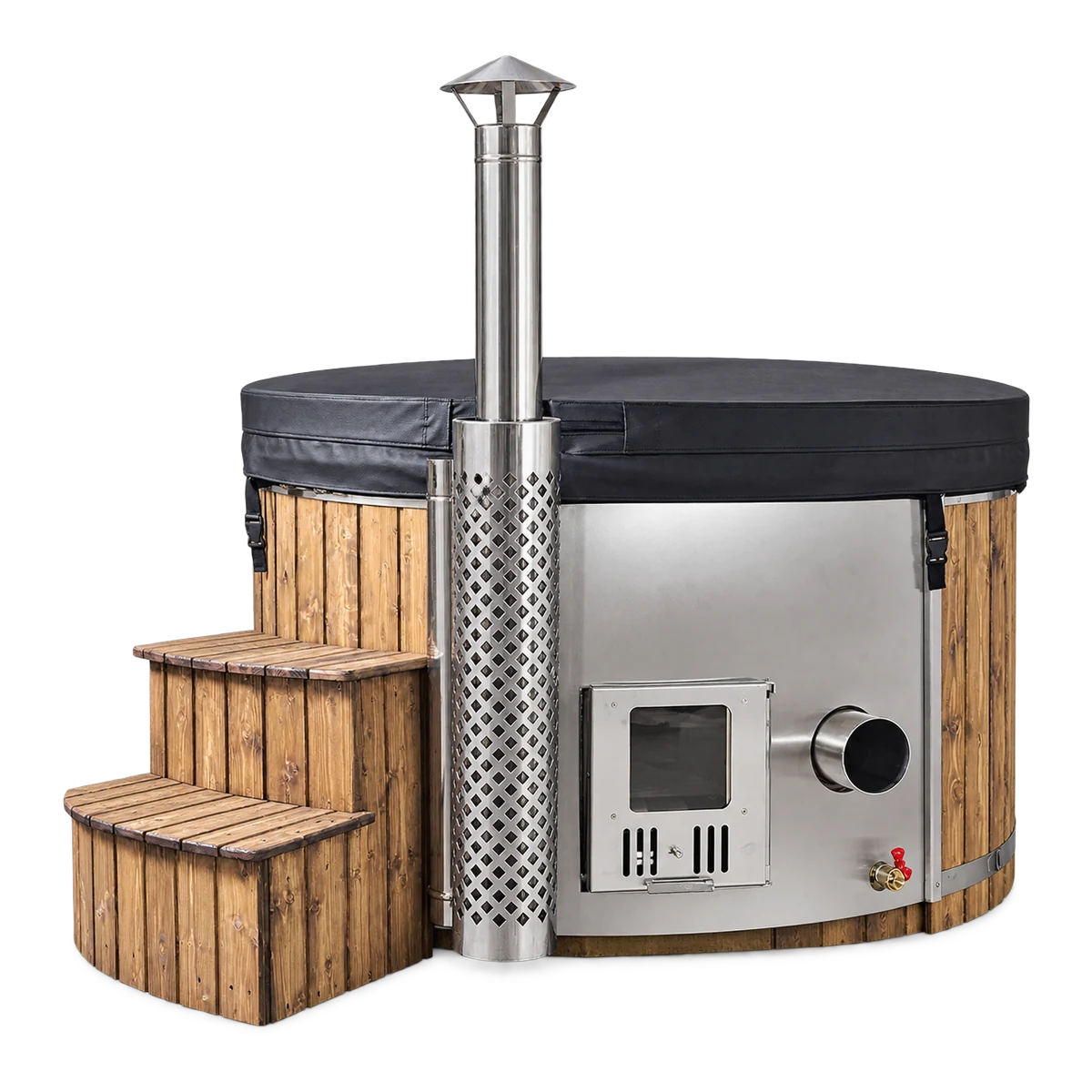
If the hot tub is going to stand unused for a period in freezing weather, the safest thing is to empty it completely. Half-empty is not good enough. If you are unsure how your model is emptied — particularly if you have an external wood-burning stove with hoses between the stove and the tub — then ask us, and we will explain how it is done on yours.
If you would rather not have to choose, and want water in the tub all winter without lighting the stove every third day, there are solutions with circulation and electric heating. That has to be assessed for each individual tub, so get in touch with us and we will look at it together.
Expect a longer heating time
The heating time we quote is approx. 1,5 hours for the Ofuro and approx. 2 hours for the L model with the standard stove. In winter it takes longer. The water you fill with is colder, the air around it is colder, and the heat leaves the tub faster.
Two things help noticeably:
- The thermal lid. It goes on the tub between baths and holds the heat. In winter it is not a decorative extra; it is what saves you from starting all over again every time.
- Interior thermal insulation. The insulation sits between the tub and the cladding and reduces the heat loss through the walls. The two are often chosen together, and winter use is precisely the reason.
Always fill the tub before you light the stove, and use dry wood or briquettes. We do not recommend coal.
Filter and water care in freezing weather
A sand filter can be used in summer, but not in freezing weather. Water standing in the filter and the hoses freezes when the temperature falls below zero.
In winter you therefore keep the water clean with water care products for swimming pools, in the same way as during the rest of the year. The recommended chlorine level in hot tub water is 0,6–1,0 milligrams per litre. There are chlorine-free products too, for example with active oxygen or copper. We have written more about the different products in How do you maintain a hot tub?
The woodwork and the stove in the cold
Wood is a natural material, and winter is hard on it. The shifts between damp, frost and sun wear at the surface. We recommend treating the woodwork with a preservative, oiling it or painting it once a year — do that job in the autumn or the spring, while it is dry and mild enough for the treatment to cure.
The stove needs a little more attention in winter as well, simply because you light it more often. Clean it every third to fifth time you light it, depending on how much ash has built up. Ash that is left lying draws in moisture.
If you are going to use sea water, the standard stove is in 304 steel. For sea water we make the stove in 316 steel — ask us for a price.
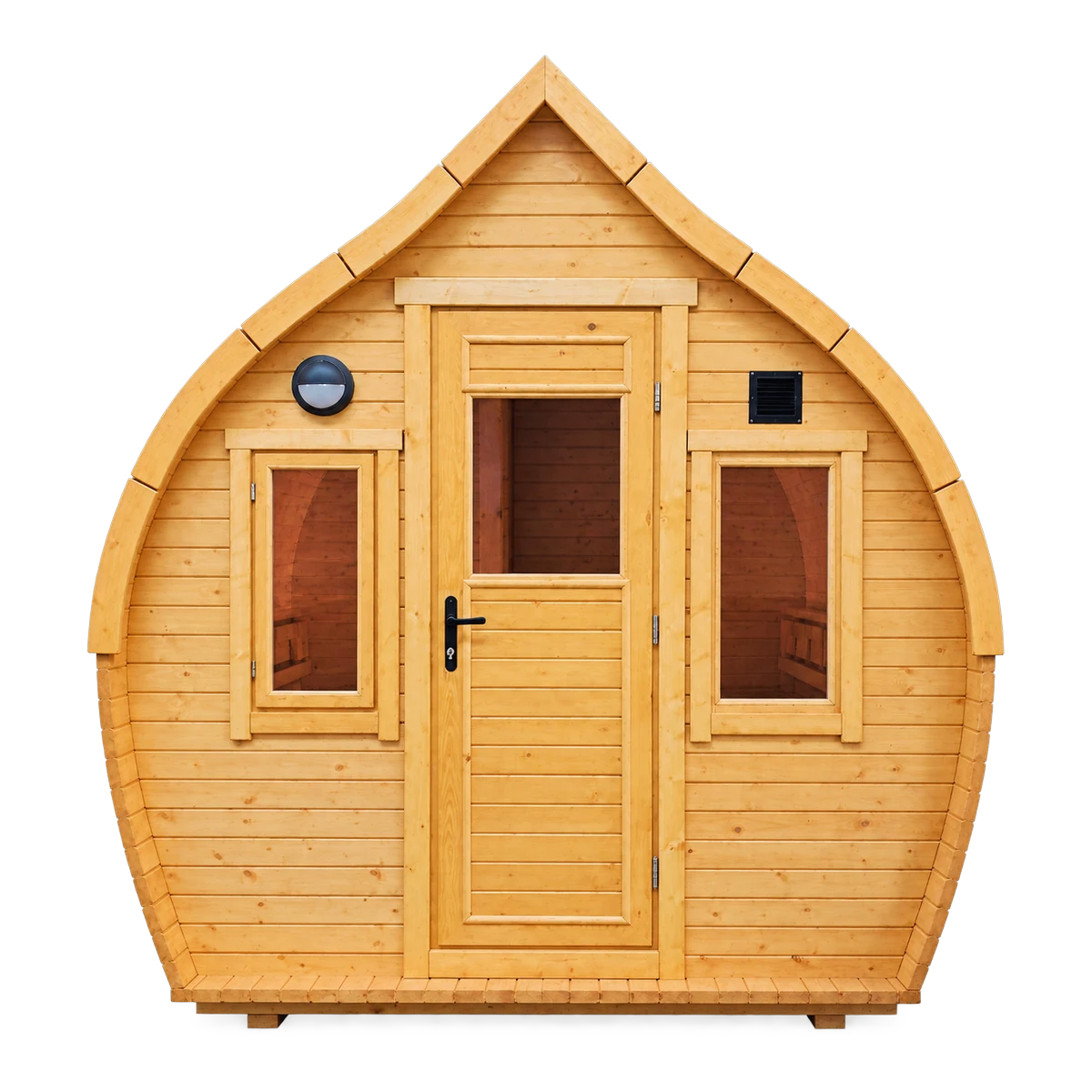
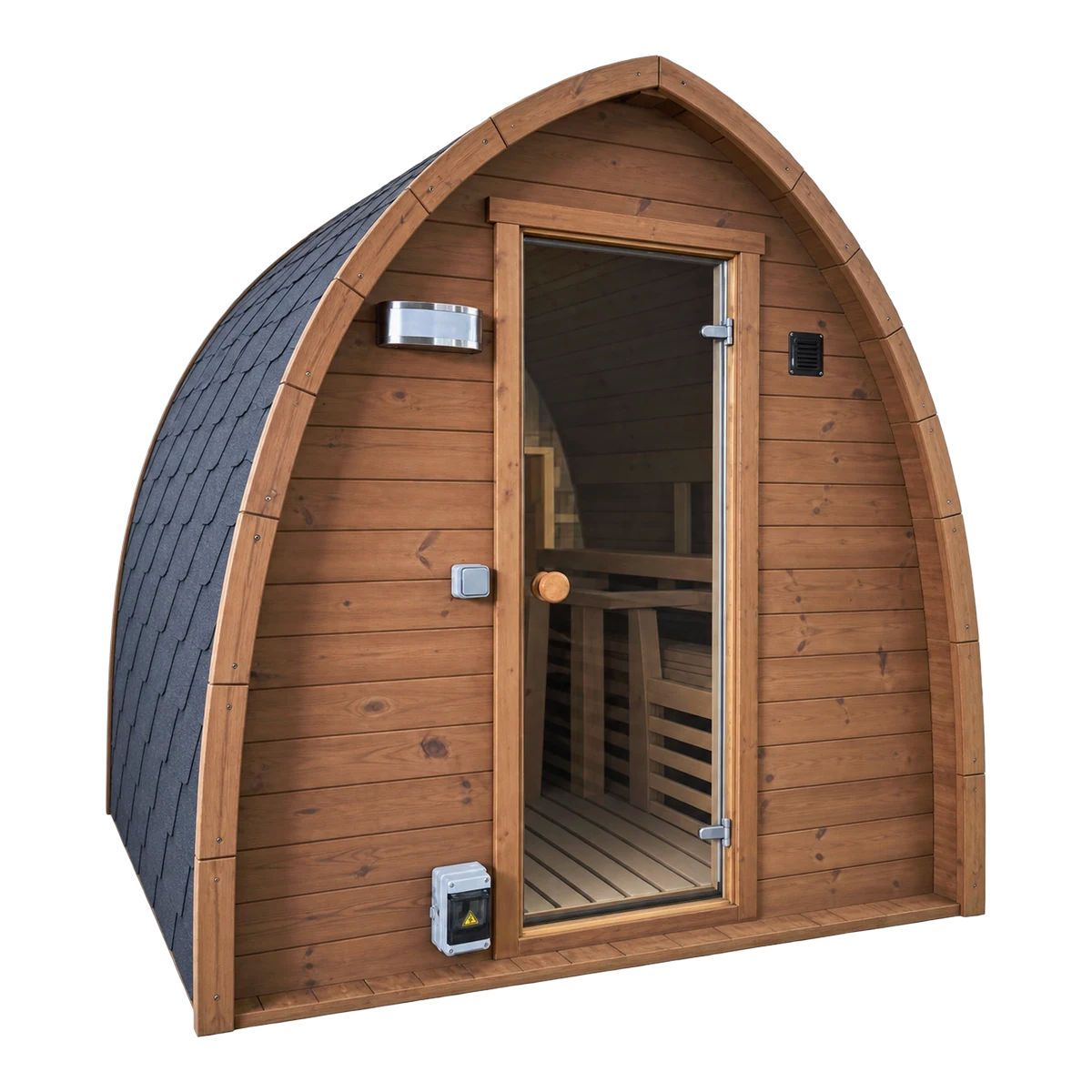
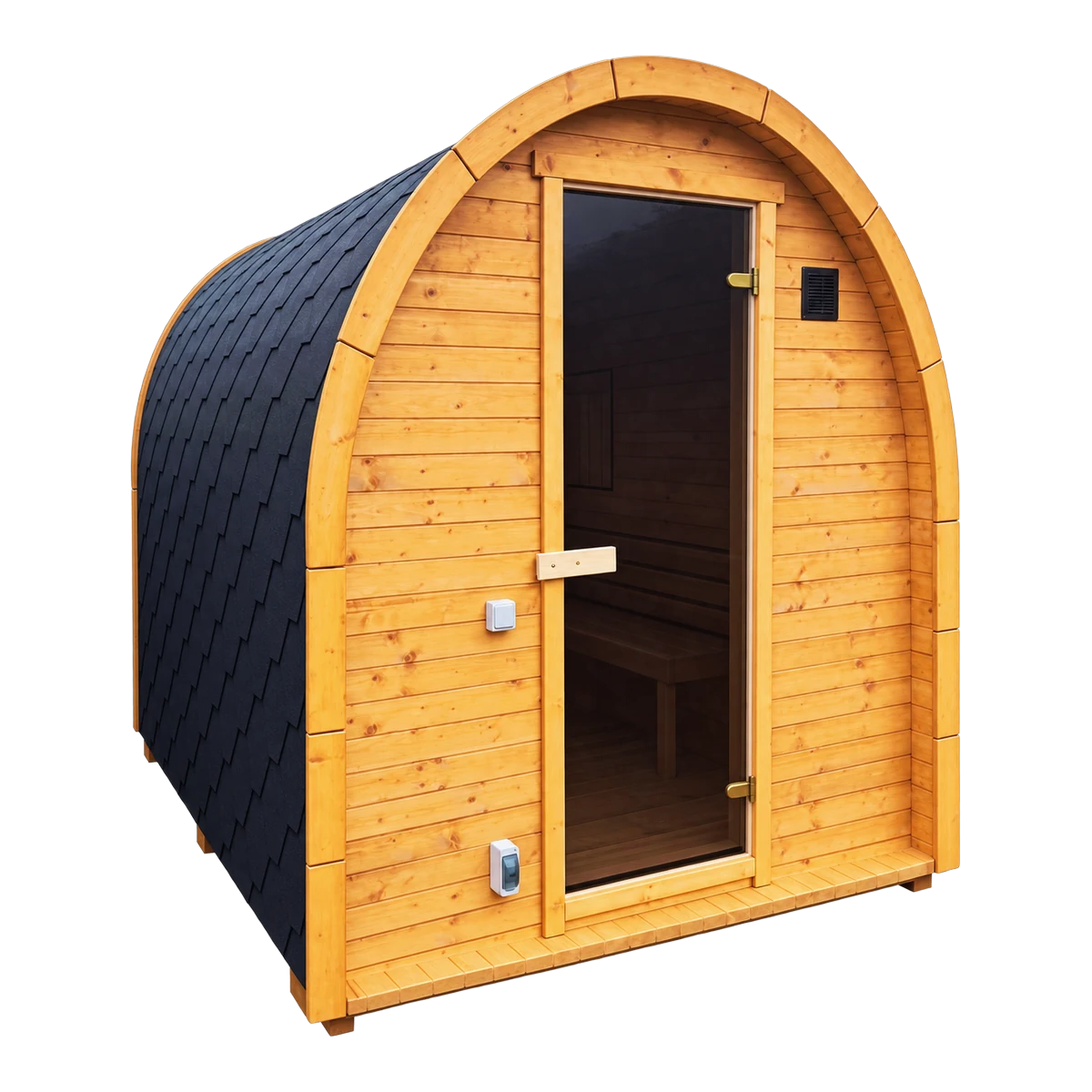
The sauna in winter
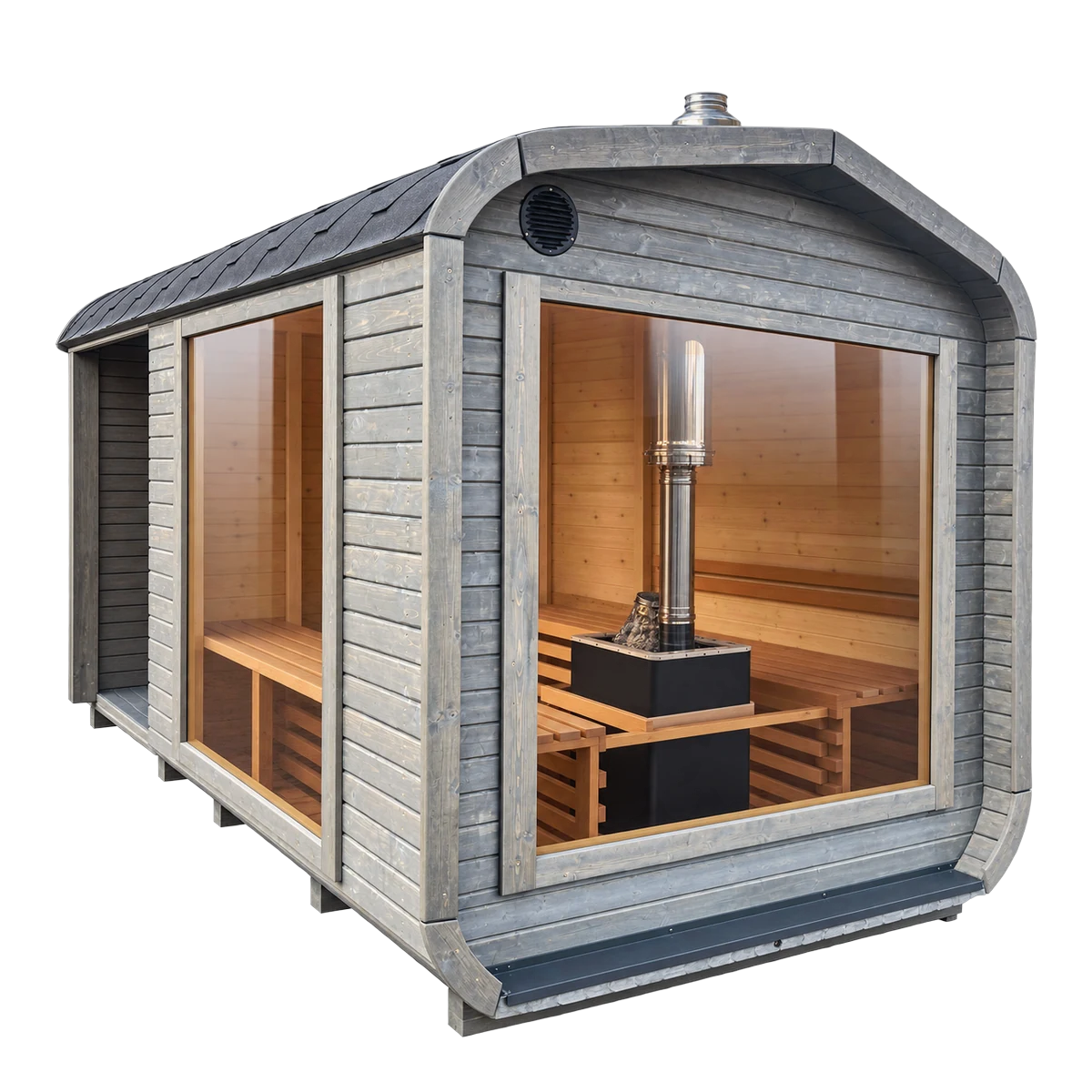
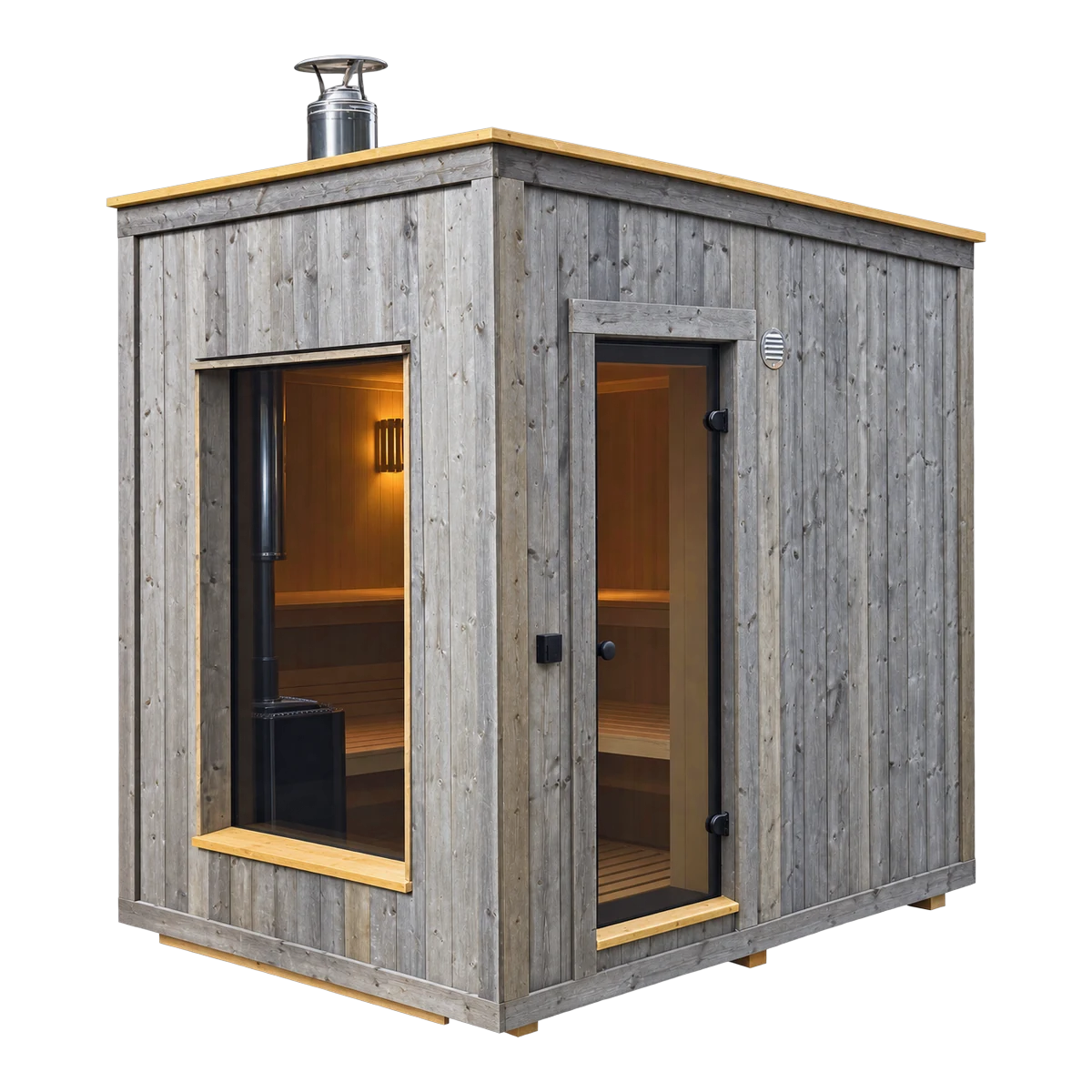
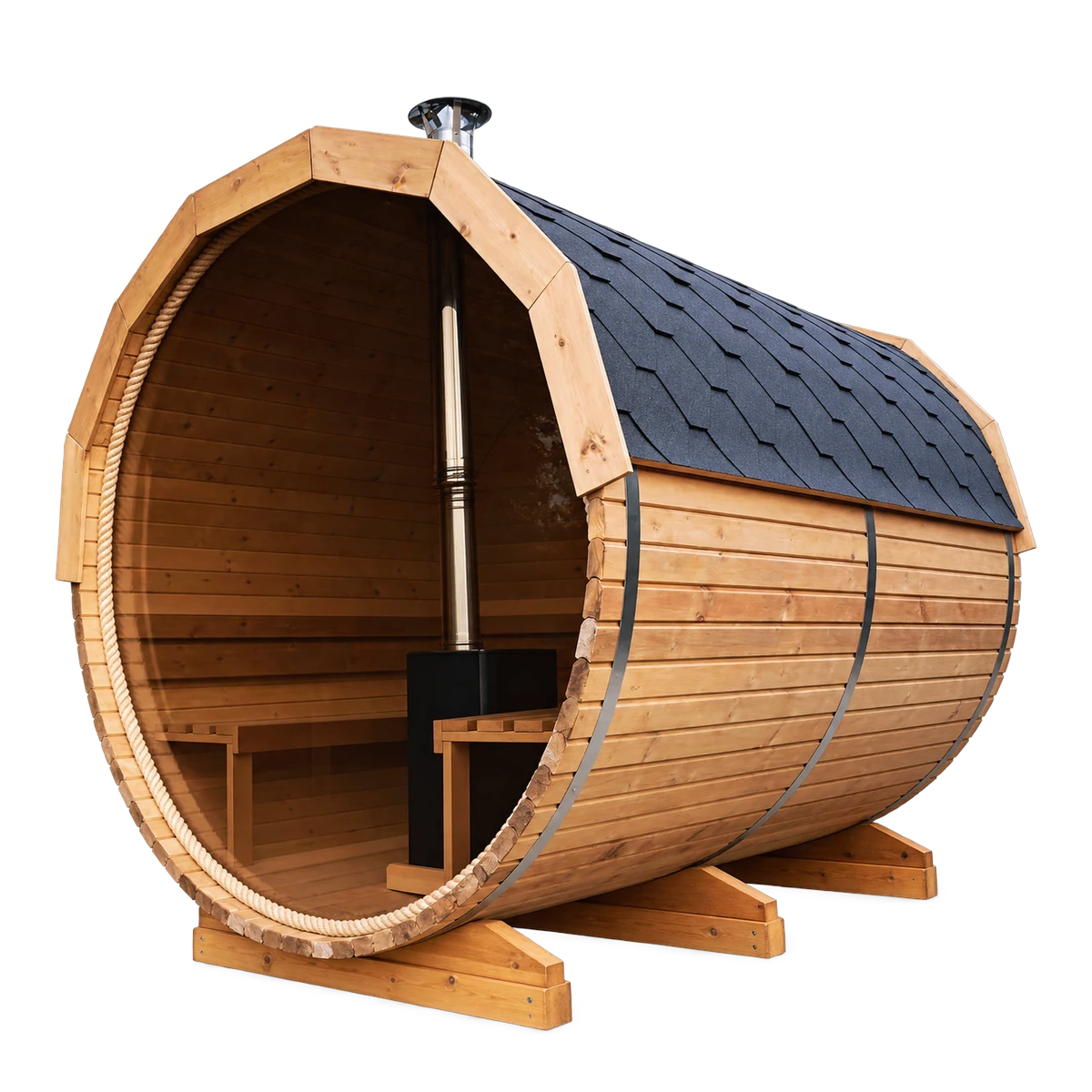
The sauna is simpler than the hot tub, because there is no water standing in it. It is fine left cold.
If you have a fully insulated sauna, you notice the difference on cold days: 10 cm of rock wool, a vapour barrier and heat-reflective foil, a ventilated wall and an insulated floor mean that the heat stays inside, and that it comes up to temperature faster than an uninsulated sauna. If you have an electric stove with a Wi-Fi control unit, you can start the heating before you arrive at the cabin, so that the sauna is ready when you are.
One practical detail many people do not think about: an ordinary lock can freeze in winter. If the sauna needs to be lockable, say so in your enquiry, and we will recommend a solution that works in the cold as well.
Otherwise the same applies to the sauna as to the hot tub: keep the woodwork maintained on the outside, and burn dry wood if it is wood-fired.
Ask us
If you are in any doubt about what applies to your model, or you are considering options with winter use in mind, get in touch. We make everything to order in Flå, and we know how our products behave in a Norwegian winter climate.
See also Use and maintenance, call 406 02 349 or write to post@hallingdal-badestamp.no.