

How do you maintain a hot tub?
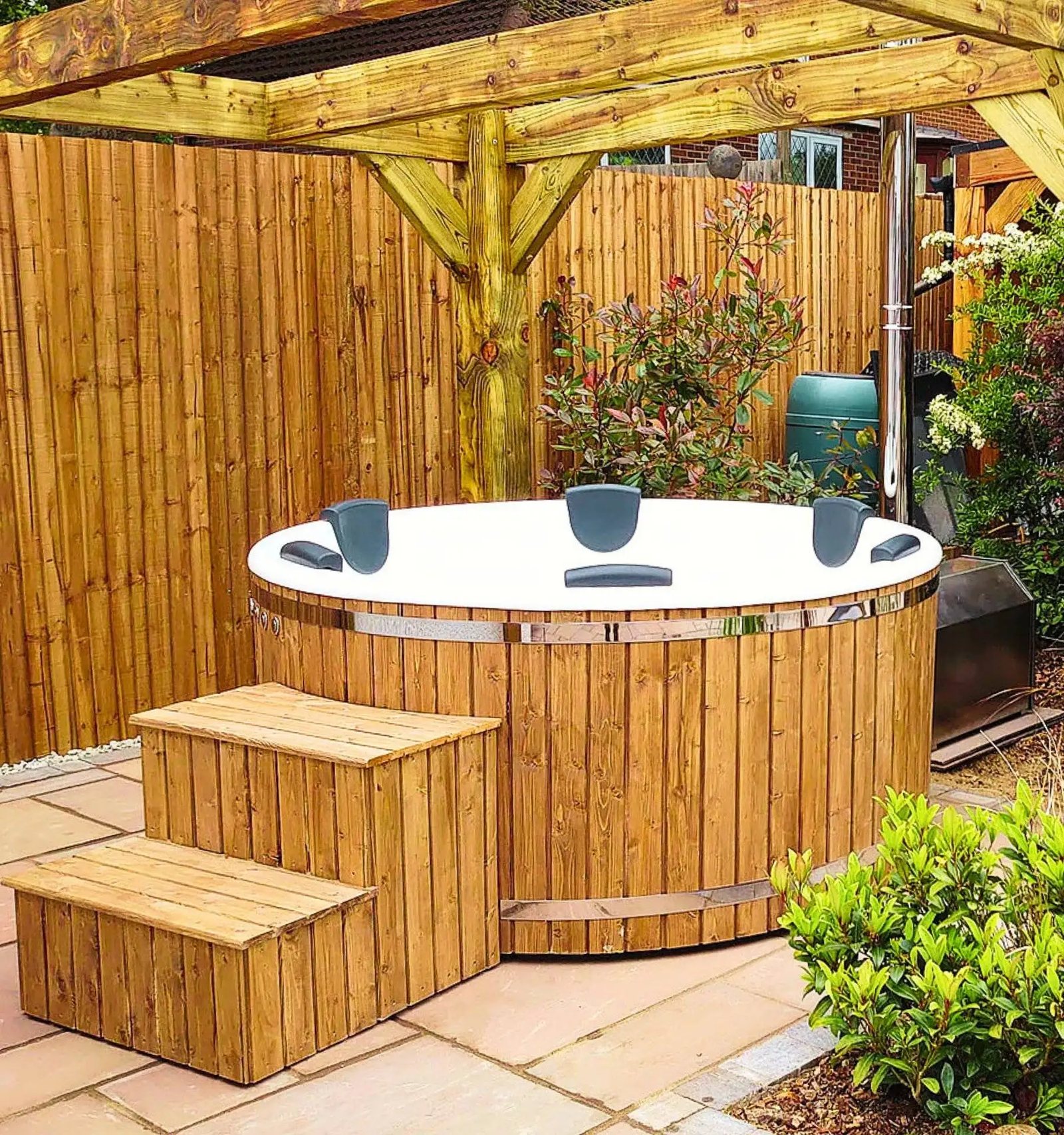
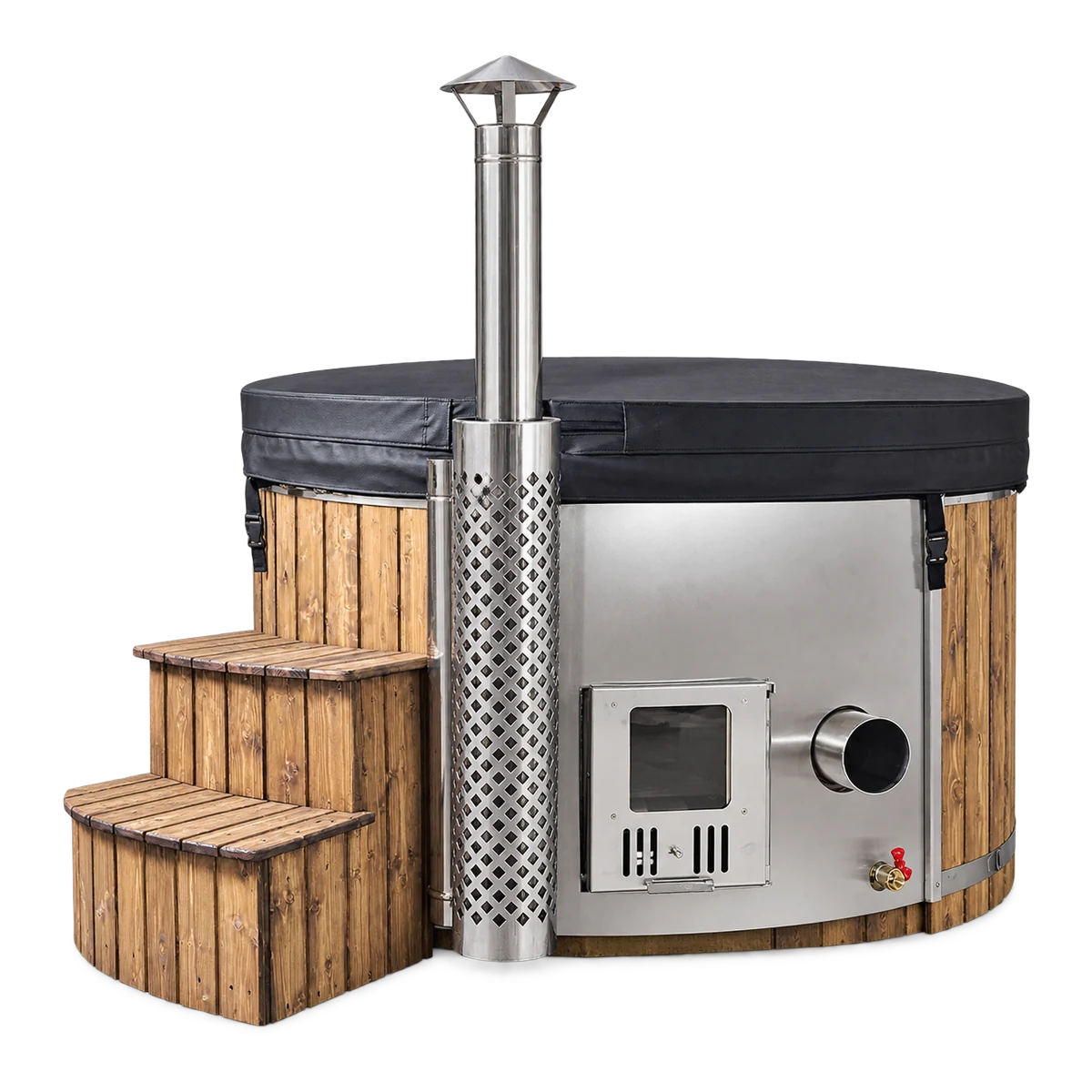
The advantage of hot tubs with a fibreglass liner is that they are easy to clean, more hygienic and need less maintenance. If you buy a hot tub with a liner, you can use it as soon as the stove is connected.
- Wood is a natural product. To keep it looking good, we recommend treating it with a preservative, oiling it or painting it once a year.
- Ordinary bathroom or swimming pool cleaning products can be used on the liner.
- The stove should be cleaned every 3rd to 5th time it is used, depending on how much ash has built up.
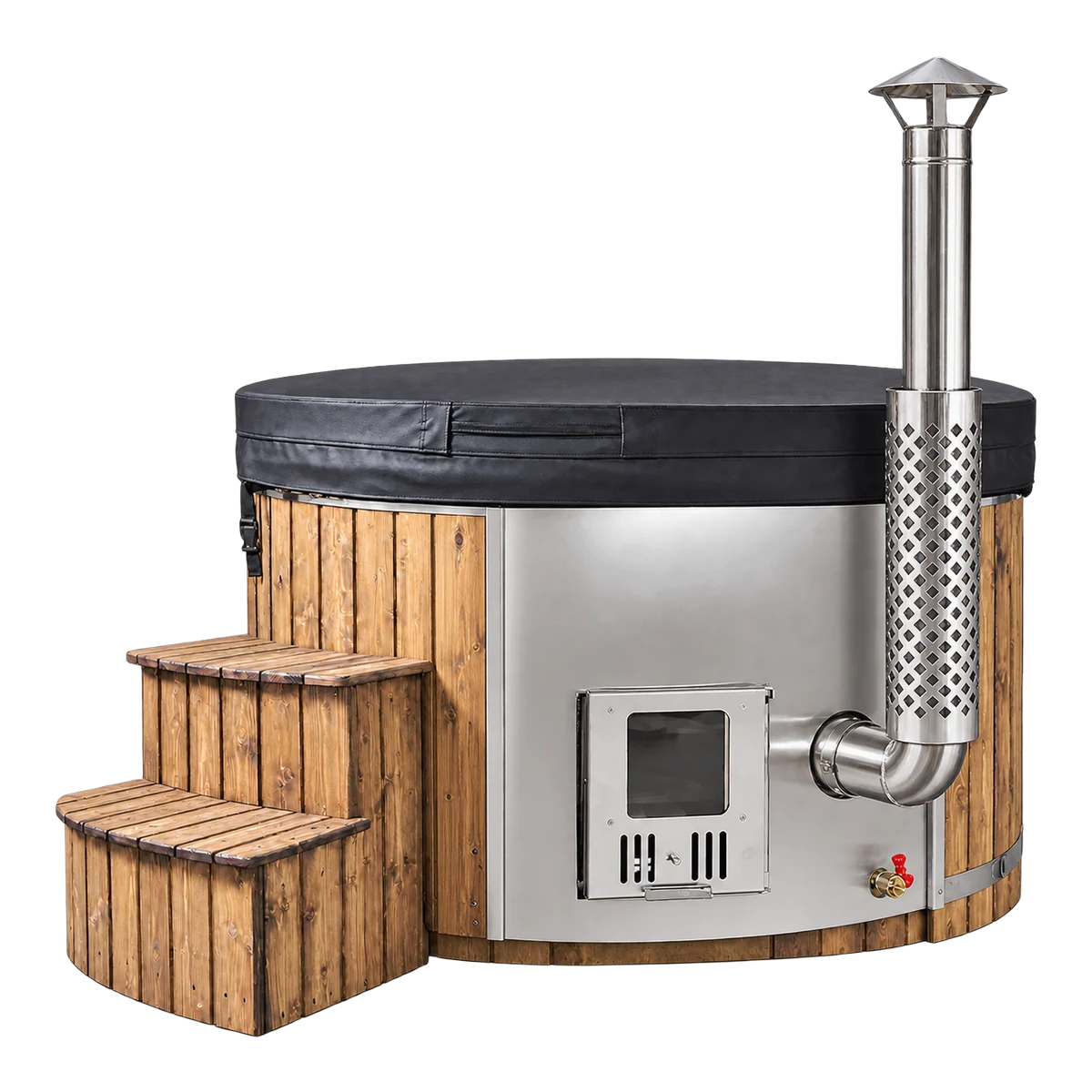
- Use a lid to protect the inside of the hot tub from leaves, twigs, dust and other debris.
In the warm season, when the water stands in the hot tub for a while and you do not want to change it after just a few baths, you have to keep the hygiene up and stop bacteria from growing. You can do that with water treatment products for swimming pools, chlorine tablets or other water clarifiers.
Which products can you use to disinfect the water?
Chlorine is one of the most widely used disinfectants. It is used not only to treat the water in swimming pools and hot tubs, but in drinking water too. Chlorinated water can still irritate the skin or trigger allergies. If you shower after bathing and use chlorine in moderation and according to the instructions, you should not notice any discomfort. The recommended chlorine level in hot tub water is 0,6–1,0 milligrams per litre.
Chlorine-based products come in several forms:
- Fast-dissolving chlorine tablets. 20 gram tablets with a high concentration of active chlorine. They are used to disinfect freshly filled water, and are also effective for stabilising contaminated water that has not been treated for a long time. The tablets go in a skimmer or a dosing float.
- Slow-dissolving chlorine tablets. 200 gram tablets, suited to keeping the chlorine level in the water steady. There are also multi-tablets combining chlorine, algaecide, flocculant and a pH stabiliser, so you do not have to keep on top of clarity, pH and algae separately.
- Liquid hypochlorite. A liquid water treatment product that is poured into an automatic doser. It restores the clarity of the water, and gives roughly the same result as slow-dissolving tablets.
Chlorine-free products
Chlorine-free products are not only chosen by people who are allergic to chlorine. Some do not like the smell, or how it feels when the water gets in their mouth. Chlorine also disappears over time in sunlight, so cleaning with chlorine needs more following up.
- Copper-based products. Copper removes algae and bacteria, and is also used as an additive in drinking water. Modern copper products are effective and leave no stains. The maintenance takes less time, since the water only needs cleaning every other month.
- Active oxygen. Water treated with active oxygen is soft, does not smell of chemicals and does not trigger allergies. Active oxygen kills microbes, bacteria, mould and fungus. The products may contain an algaecide. Remember that active oxygen needs an activator of its own to work.
- Bromine-based products. A good alternative to chlorine. The price is a little higher, but you do not need to check the water as often as with chlorine. Bromine does not stand up to UV light, though, so you use more bromine than chlorine.
See also the page on use and maintenance, or give us a call if you have any questions.