
Should your hot tub have an integrated or an external stove?
Both types of stove are equally good. Here are the advantages and drawbacks we have seen — then it is up to you to choose the one that suits you best.
Integrated stoves
Advantages
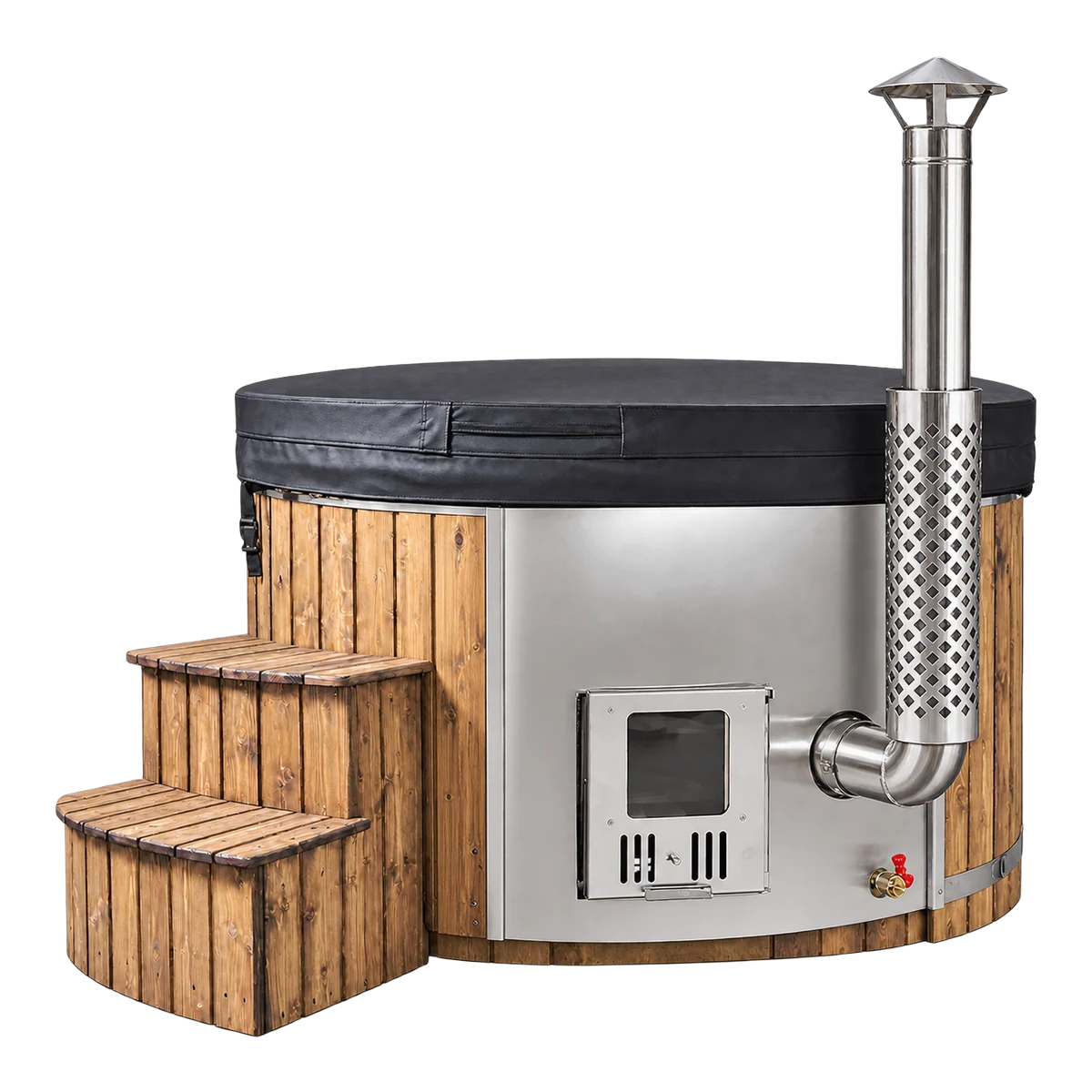
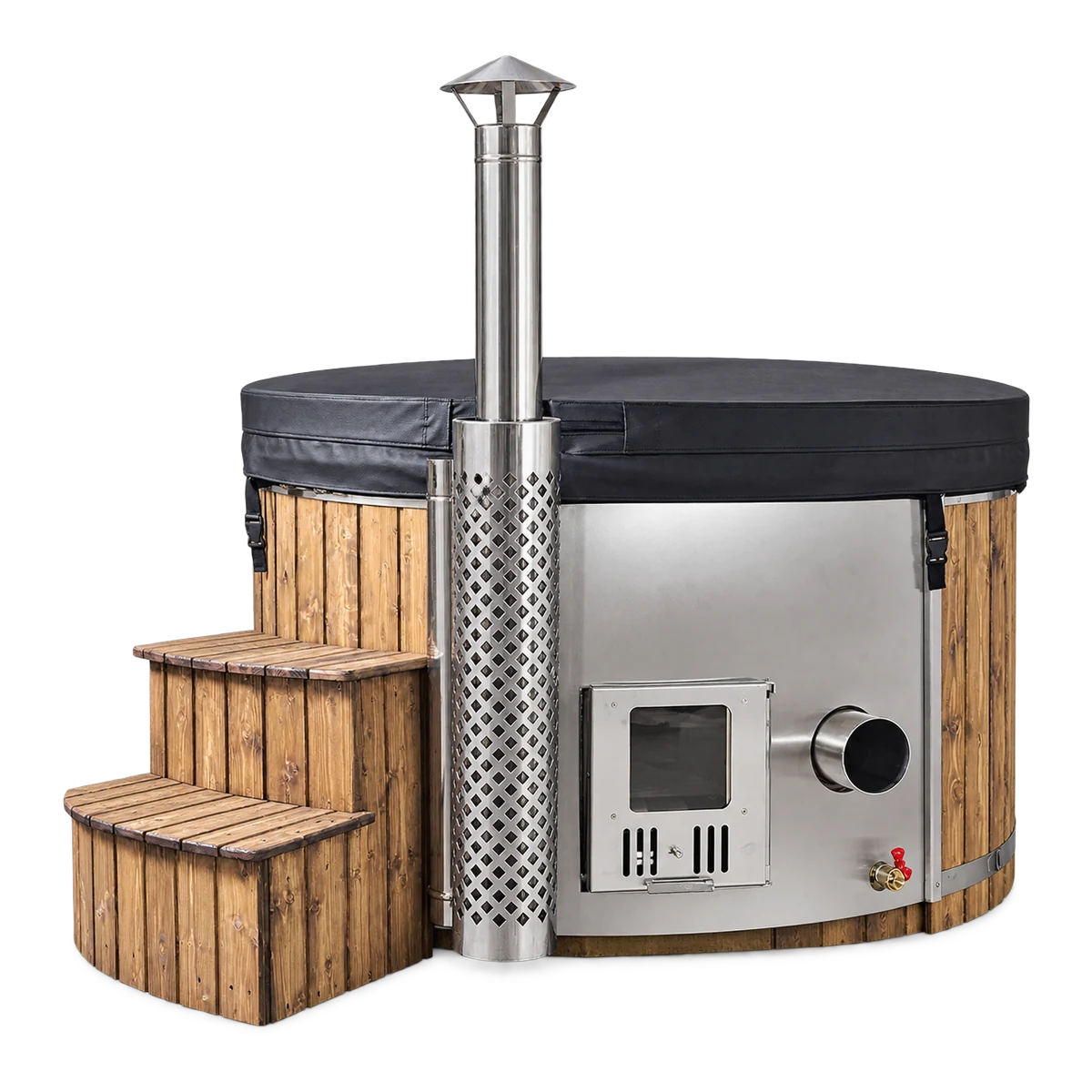
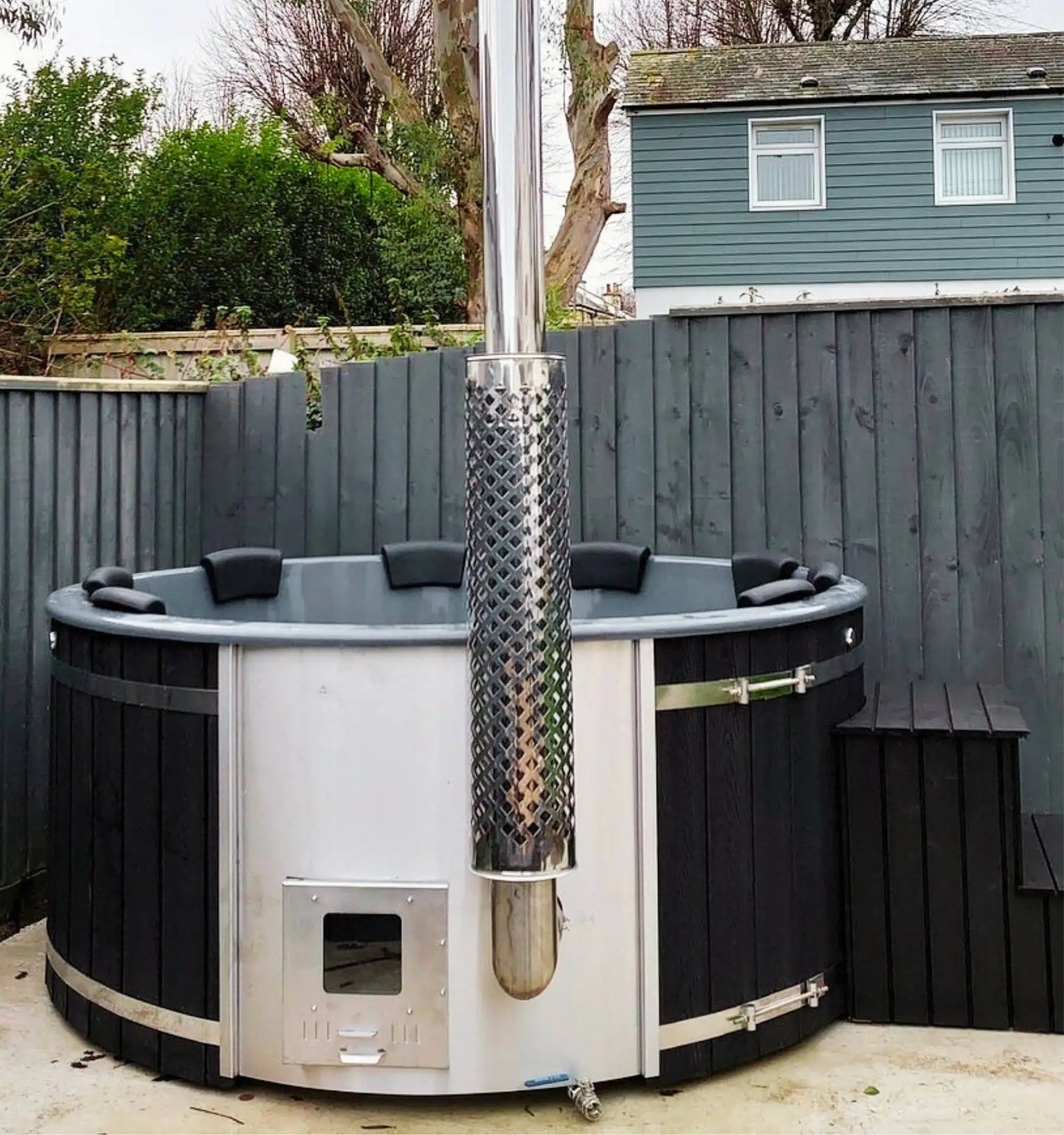
- The stove is mounted beneath the fibreglass liner and is almost invisible. Only 1/6 of the stove shows outside the hot tub, where you load the fuel.
- The recommended fuel is dry wood and briquettes. Coal is not recommended, mainly because of the risk of particles reaching the lungs of those bathing, since the chimney is 2 m tall and rises up out of the hot tub.
- The water heats up faster than in hot tubs with an external stove, because the heating happens in a smaller volume of water (MIDI approx. 1200 l, MAXI approx. 1400 l).
- You save space in the garden, since a hot tub with an integrated stove takes up no more room than its own external diameter (MIDI Ø 205 cm, MAXI Ø 225 cm).
- The stove is made from 2 mm thick stainless steel.
- This type is recommended for families with children, because placing the stove beneath the seating removes the risk of burning your shoulders.
- The chimney rising out of the hot tub has an extra 1 m of guarding against burns.
- The integrated stove has an output of 35 kW.
- For the best result, the more durable, chlorine- and salt-resistant AISI 316 stainless steel is recommended.
Drawbacks
- Less usable space in the hot tub, since a curved fibreglass liner around the stove takes up some of it.
- If it cracks or wears after many years of use, replacing the stove can take longer.
External stoves
Advantages
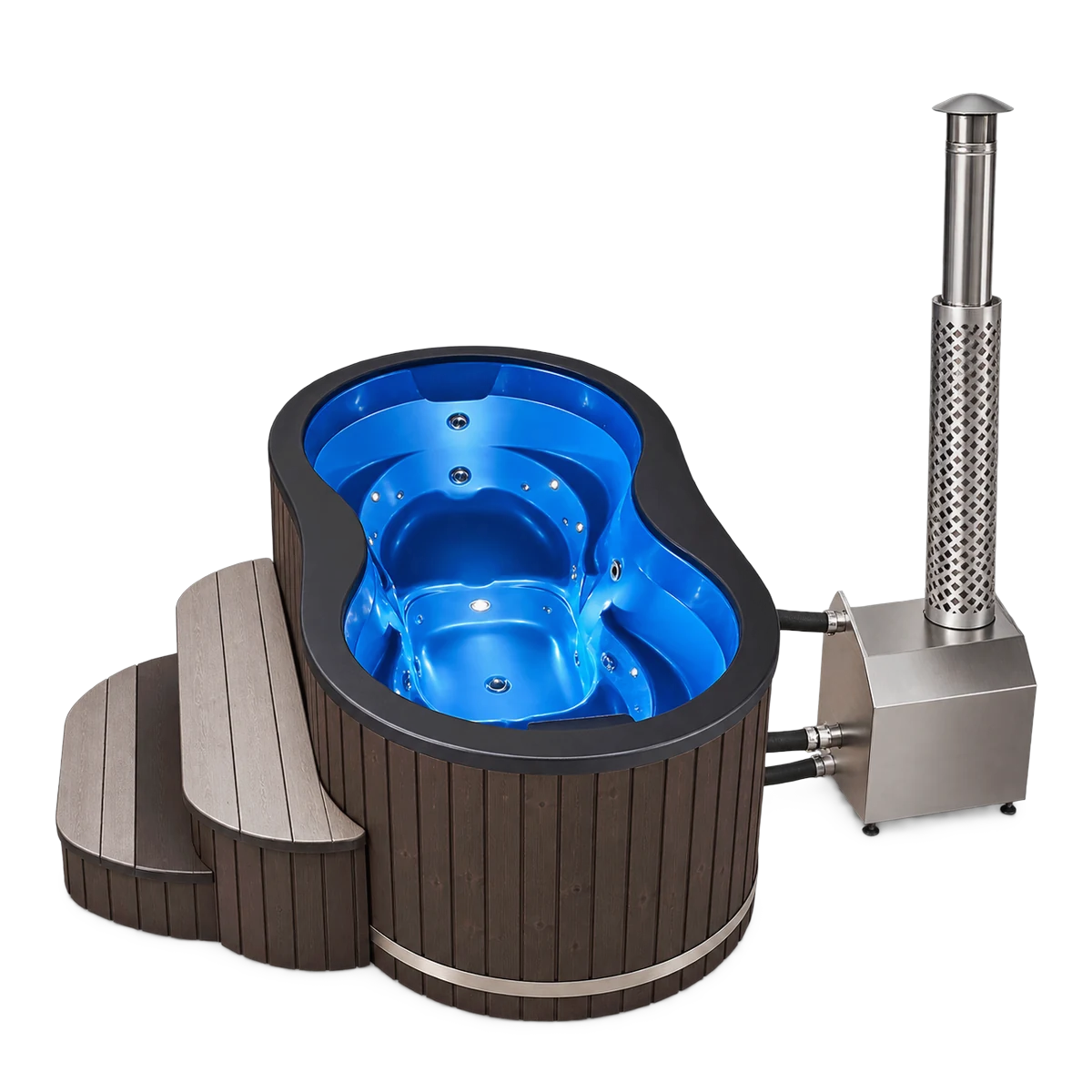
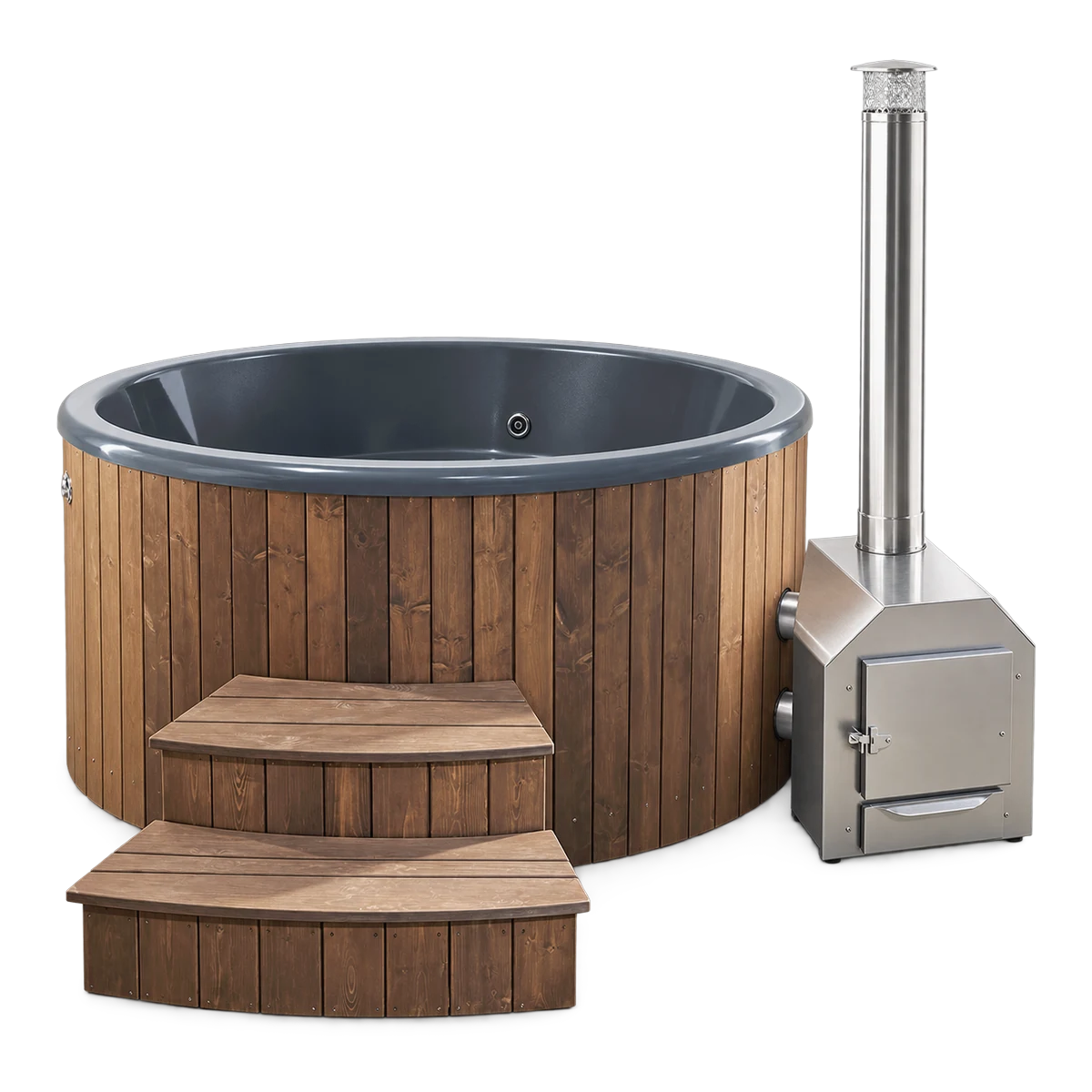
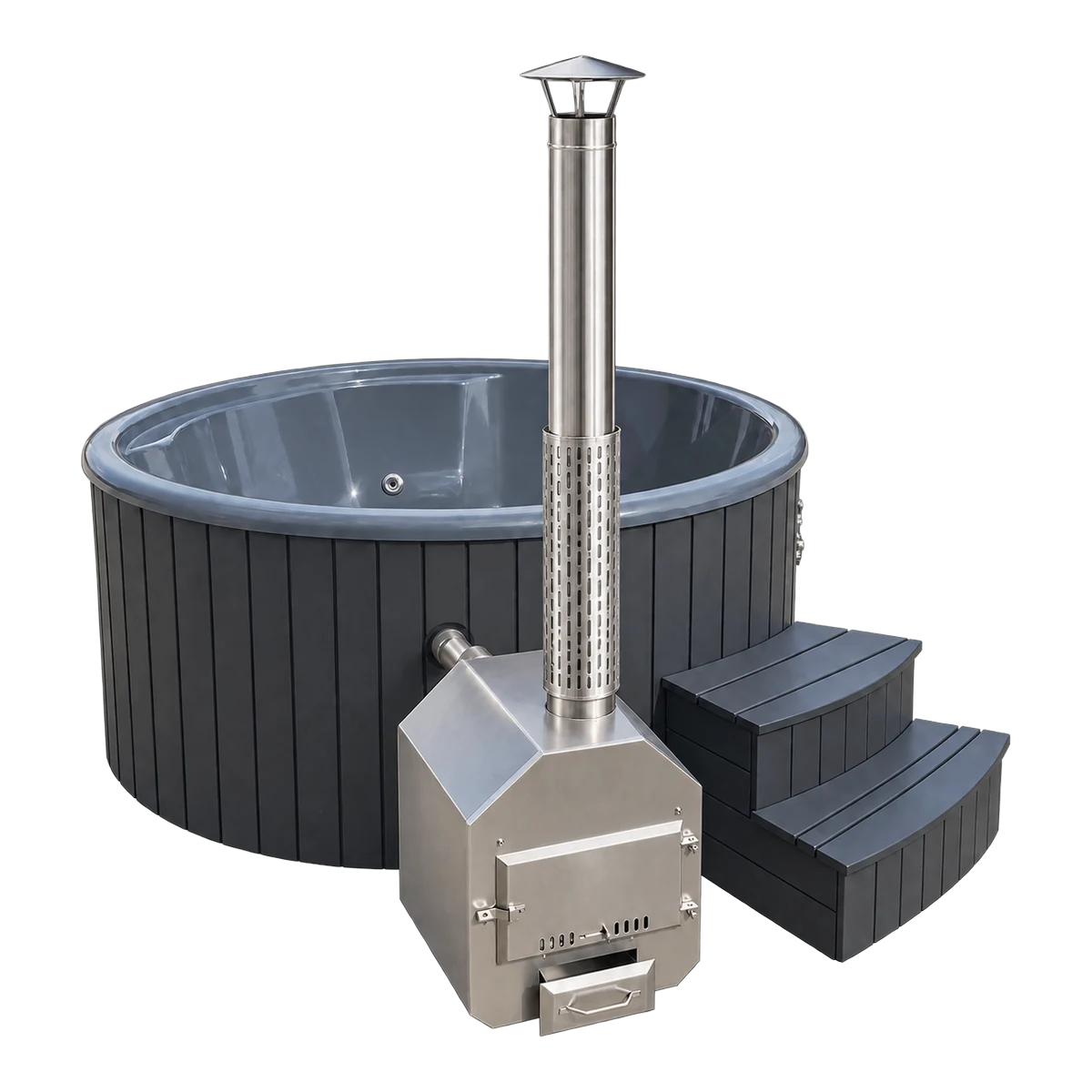
- More usable space in the hot tub, since the stove stands on its own and takes up no room in the tub.
- Easier to install the hot tub on a terrace, since the stove can stand further away from it. Remember that the stove has to sit at the same height as the hot tub, and that there must be a suitable spot for it beside the terrace.
- The recommended fuel is dry wood and briquettes. Coal is not recommended.
- The stove is made from 2 mm thick stainless steel.
- This type is recommended for owners of detached houses, farms with a tourism business, and anyone else with plenty of room for the hot tub.
- The best choice if you want a mobile hot tub.
- The external stove has an output of 26 kW.
- For the best result, the more durable, chlorine- and salt-resistant AISI 316 stainless steel is recommended.
Drawbacks
- The stove needs extra space.
- Together, the hot tub and the stove take up more room in the garden.
- The stove is easier to steal.
See the models with an integrated wood-burning stove and an external wood-burning stove, or get in touch if you would like help choosing.